01 / Applications
Characterization of GLP-1 and related metabolic peptides
Choose aggregation, conformation, charge and receptor activity methods for your molecule and study objective. The receptor assay strategy for the amylin analog cagrilintide is scoped separately.
SV-AUCCircular dichroismicIEF charge profilingCell-based bioactivity and relative potency
ApplicationsQuickgene
Peptide characterization roadmap
Target molecules
- Semaglutide
- Tirzepatide
- Retatrutide
- Cagrilintide
Select for your project
- Aggregation and self-associationSV-AUC
- Conformation and stabilityCD
- pI and charge heterogeneityicIEF
- Receptor activity and relative potencyCell-based assay
Method combinations and assay suitability depend on the molecule and study objective.
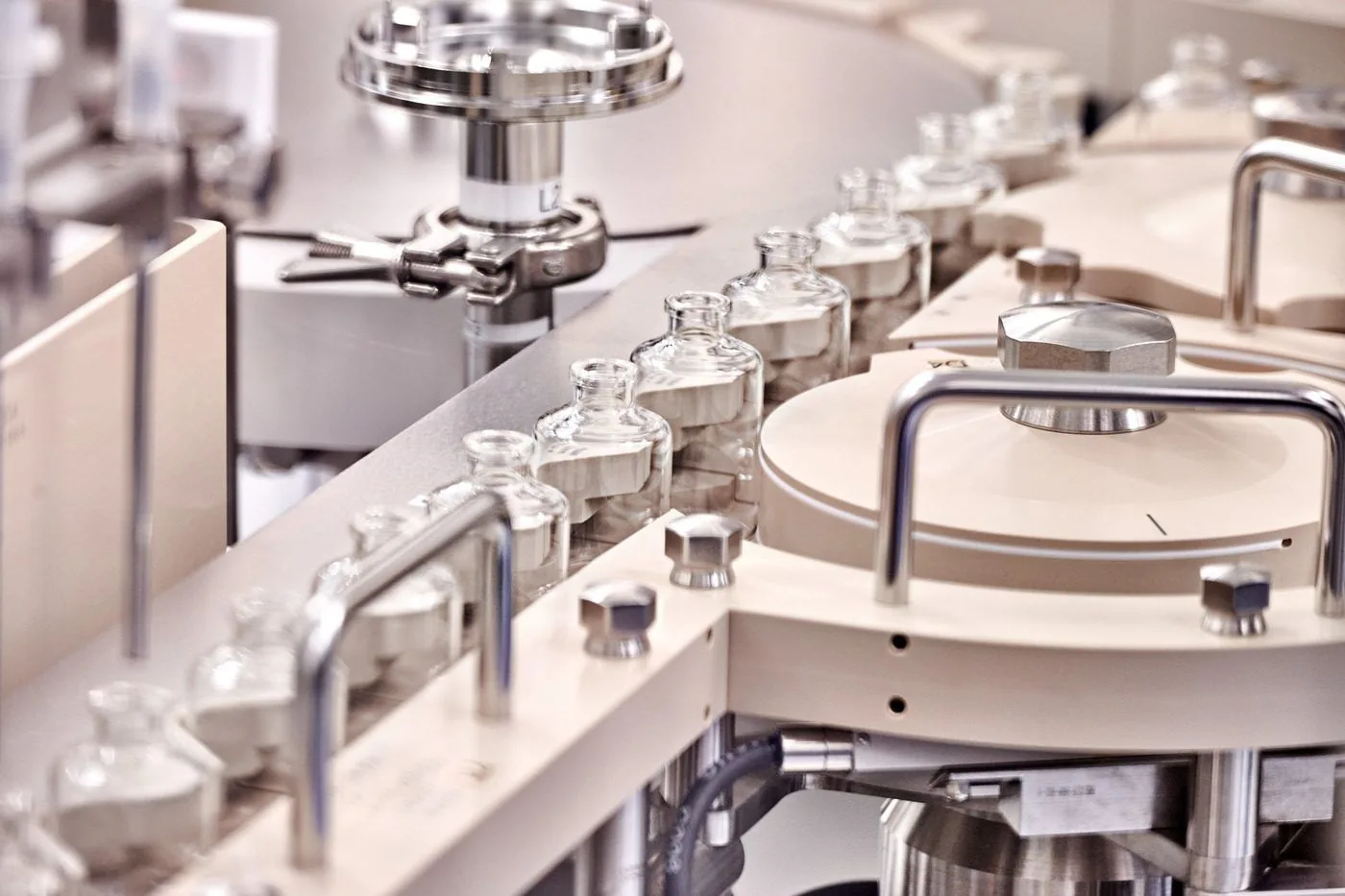
Lyophilized peptide vials in the analytical lab
Semaglutide — Fatty-acid side chain & self-association
Semaglutide is a 31-amino-acid GLP-1 analog carrying a C18 fatty-diacid side chain via a hydrophilic spacer. The lipophilic chain drives micelle-like self-association and complicates aggregation assessment — exactly the regime where SV-AUC excels.
What we analyze
- Aggregation & oligomer distribution (SV-AUC)
- Self-association behavior vs. buffer composition
- Secondary structure & α-helix content (CD)
- Charge variants incl. deamidation (cIEF)
- Relative potency vs. reference (GLP-1R reporter bioassay)
Guidelines & references
ICH Q6BStructural characterization of biotechnological products
ICH Q5EPre/post-change comparability
USP · Ph. Eur. · ChPCompendial peptide methods
Challenge → our answer
The fatty-acid side chain promotes self-association and fibrillation
→SV-AUC resolves monomer, oligomers and aggregates as a quantitative c(s) distribution in formulation-relevant buffers
Regulators expect orthogonal aggregation data, not SEC alone
→AUC provides an orthogonal, matrix-free measurement of the aggregation state
Structure confirmation is needed for generic development
→CD secondary/tertiary profiles benchmarked against the reference product
Working on Semaglutide?
Send the molecular details — we return a proposed analytical plan, free.